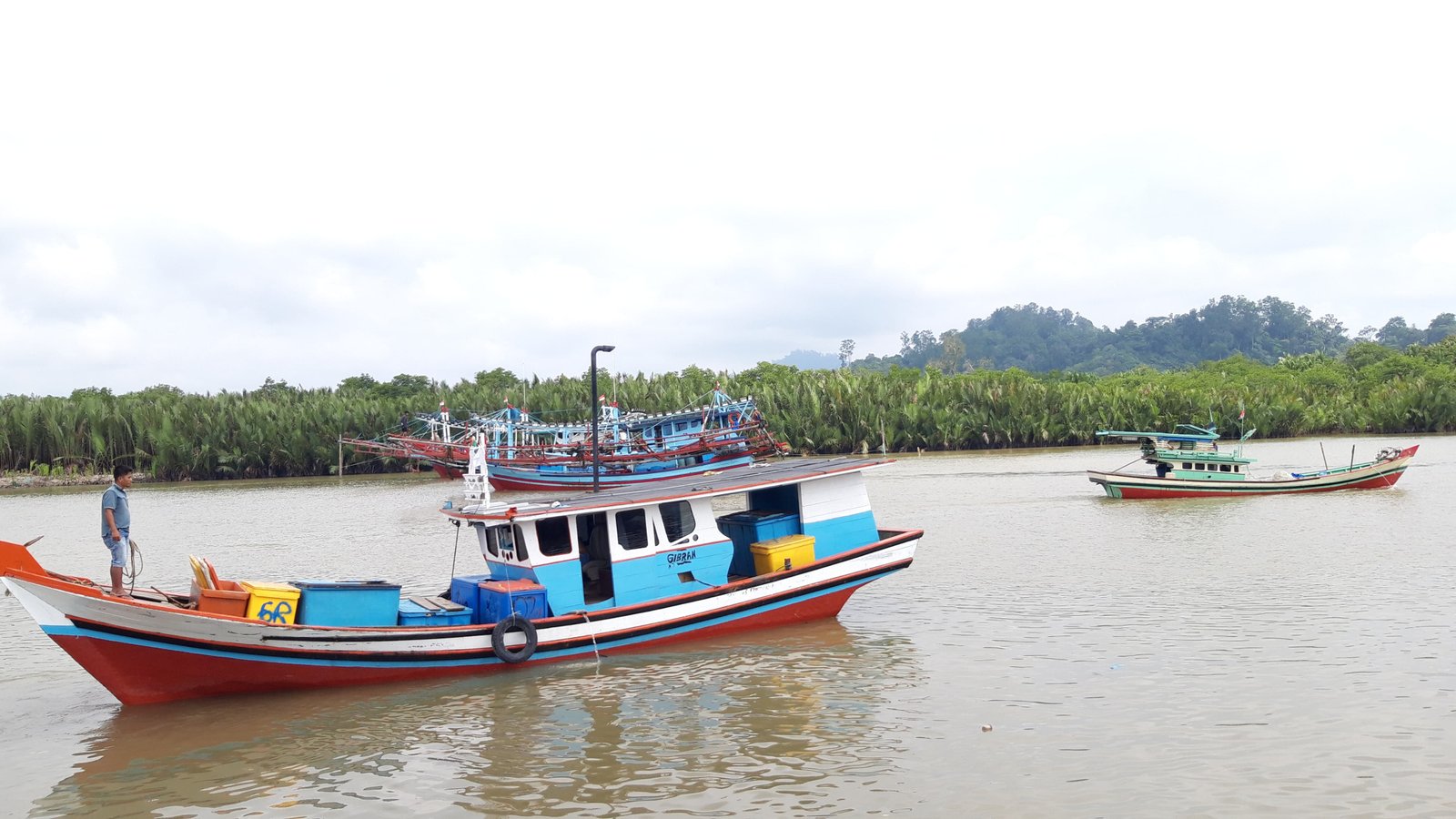
Data-fishing technology research approaches to management and sustainable development have been developed. Underlying this is a distributed fisheries observation framework that is integrated, interoperable, interactive, and accessible. This study examines fishing technology research by quantitatively and qualitatively synthesizing the global knowledge structure and emerging trends using bibliometric software. References with "fish capture technology," "fishing technology," or "fishery capture," and "innovation," "advancement," "development," or "techniques" as the subject in the Web of Science Core Collection and Scopus Database. This research was analyzed based on a Scopus-indexed core collection document from 164 journals written by 179 authors from 33 countries, with an annual growth rate of 12,3%. This bibliometric study implemented knowledge domain visualization (KDV) using Biblioshiny in the Bibliometrix R package to investigate the basic scientometric profile of the selected fields. The publication rate and output, as well as the number of active countries, institutions, authors, and cited references, were assessed. The results showed that the contributions from the top 10 authors amounted to 18 publications, reflecting a concentrated authorship pattern in this field. This distribution emphasizes the importance of both leading and emerging researchers in advancing their disciplines. Cookie SJ emerged as the most influential author based on PageRank (0.0204), with 18.25% (74) global citations across three publications from 2009 to 2023, and a closeness value of 0.0105, making them the most productive author within the field. China was determined to be the most productive country (22 valid documents) and had the most robust collaboration network. The primary research highlights in fishing technology encompass fisheries, fishery management, sustainability, and fishing practices. A considerable number of high-impact articles and comprehensive information have emerged during this period. By way of conclusion of this study provides critical insights into research dynamics and supports evidence-based policymaking for sustainable fisheries

Reader dialogue
Comments
Be the first to add a thoughtful response.